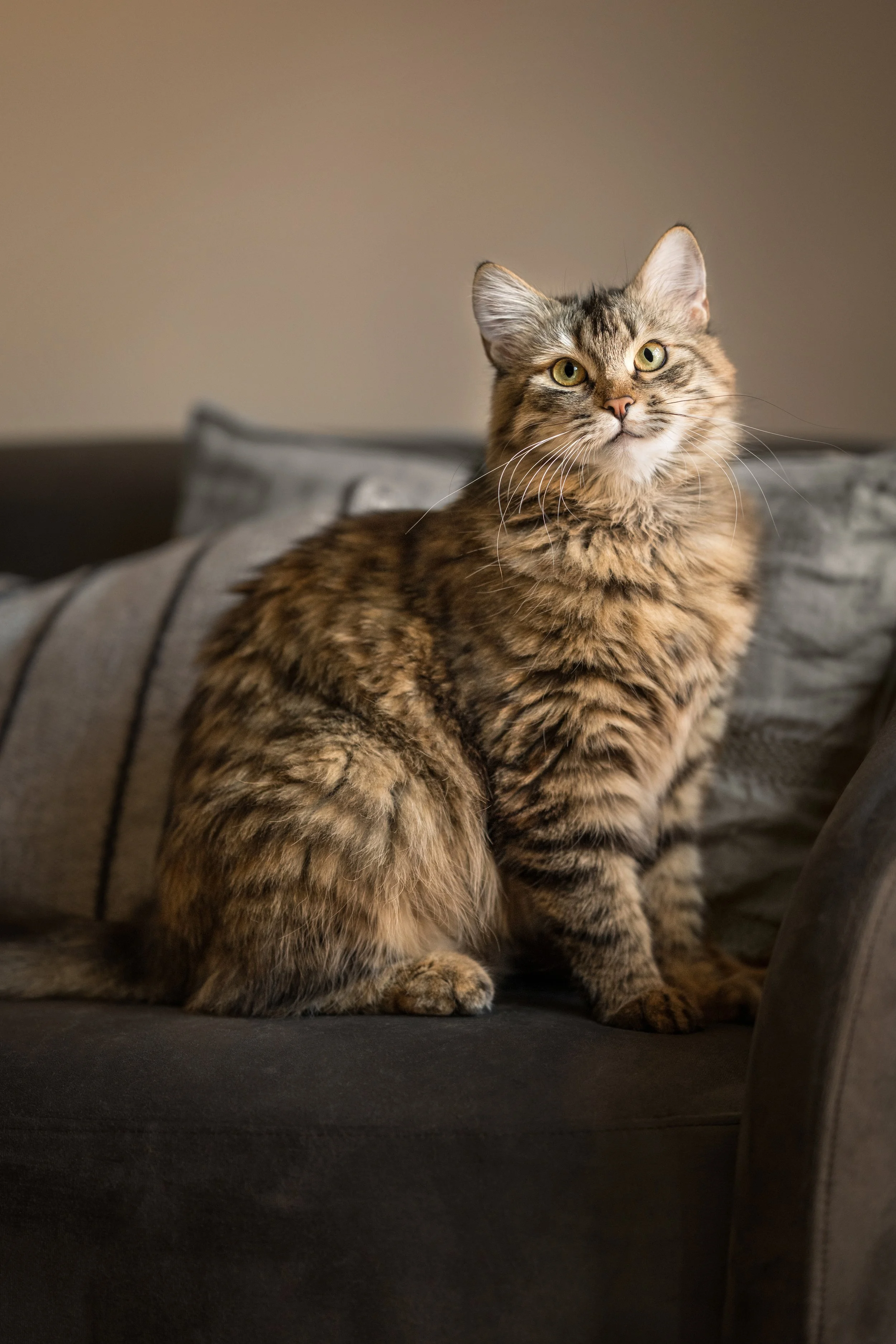
Could a Siberian kitten make cat ownership possible?
For many people with cat allergies, owning a cat is something they have assumed would never be possible.
Siberian cats offer an exciting possibility. Research has found that many Siberians naturally produce substantially less Fel d1, the protein responsible for most allergic reactions to cats, than cats of other breeds. A smaller proportion produce exceptionally low levels.
At Ammorina, we're developing a Fel d1 testing programme designed to help allergy-sensitive families find a kitten with the best possible chance of being suitable for their home.
Rather than relying on the Siberian's reputation as a "hypoallergenic" breed, we're testing our breeding cats and plan to individually test kittens from selected future litters. This gives families real information about the kitten they are considering and can make cat ownership a realistic possibility for people who may previously have thought it was out of reach.
What is Fel d1?
Fel d1 is a small protein responsible for around 70% of cat allergies.
It is produced by cats and found in their saliva, skin and other secretions. From there it spreads onto the coat and into the home environment.
Siberians are unusual because many naturally produce less Fel d1 than the general cat population, while some produce exceptionally small amounts.
This natural variation is what makes the Siberian particularly interesting for allergy-sensitive families, and why knowing an individual cat's Fel d1 level can be so valuable.
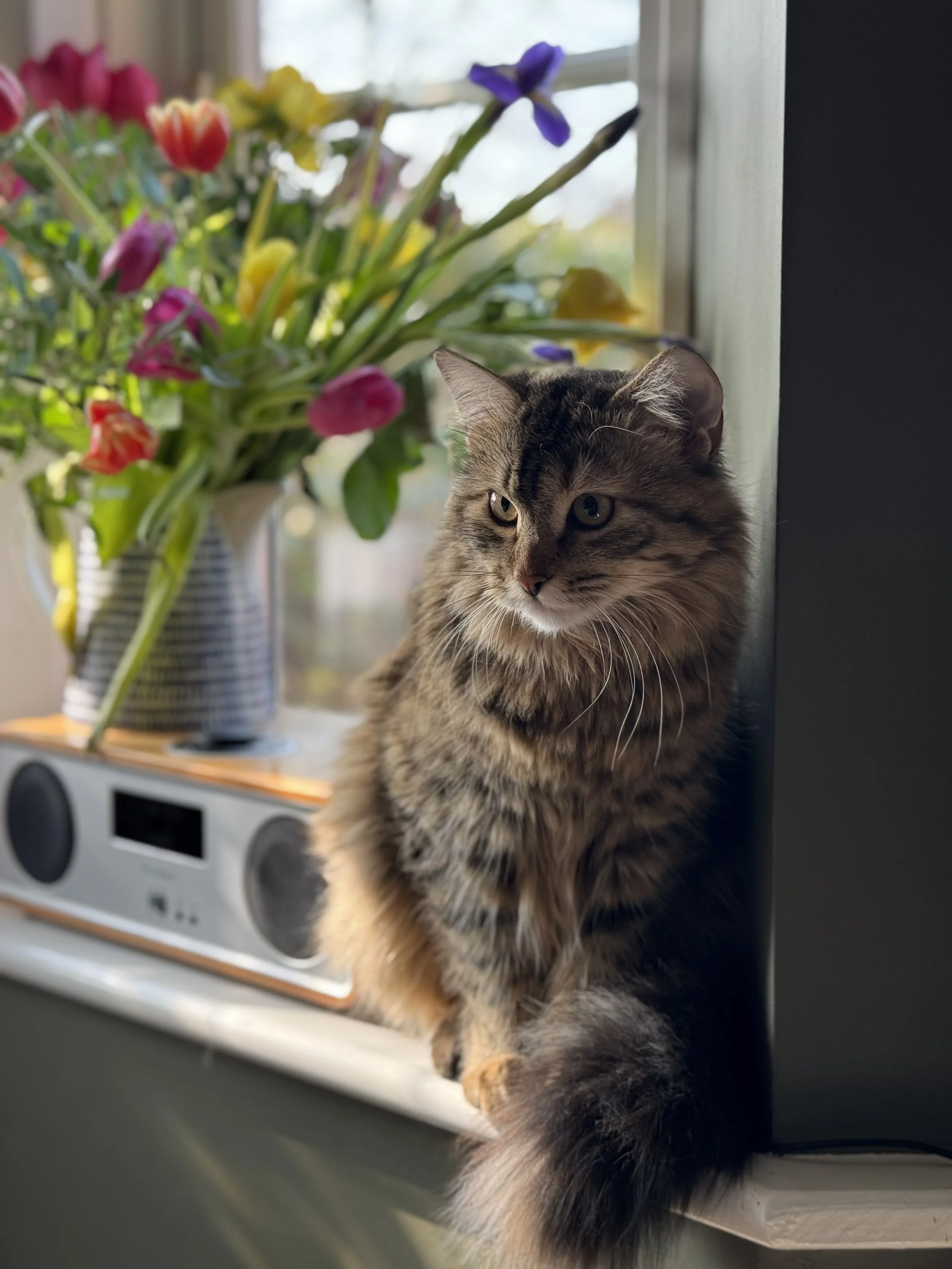
Our Fel d1 testing programme
Our cats are tested through kittentesting.com, pioneers in Fel d1 testing in Siberian cats.
KittenTesting has specialised in Siberian allergen research and testing for more than 20 years. Their work has included research with UC Davis and analysis of allergen results from hundreds of Siberian cats and kittens.
Their research found that approximately half of the Siberians tested had Fel d1 levels substantially below those typically found in other breeds.
Our Results
We began by testing Polly and Tabitha, both of whom returned encouraging results.
The remainder of our breeding cats will be tested later in 2026, and their results will be added here once available.
Our Cats’ Allergen Levels
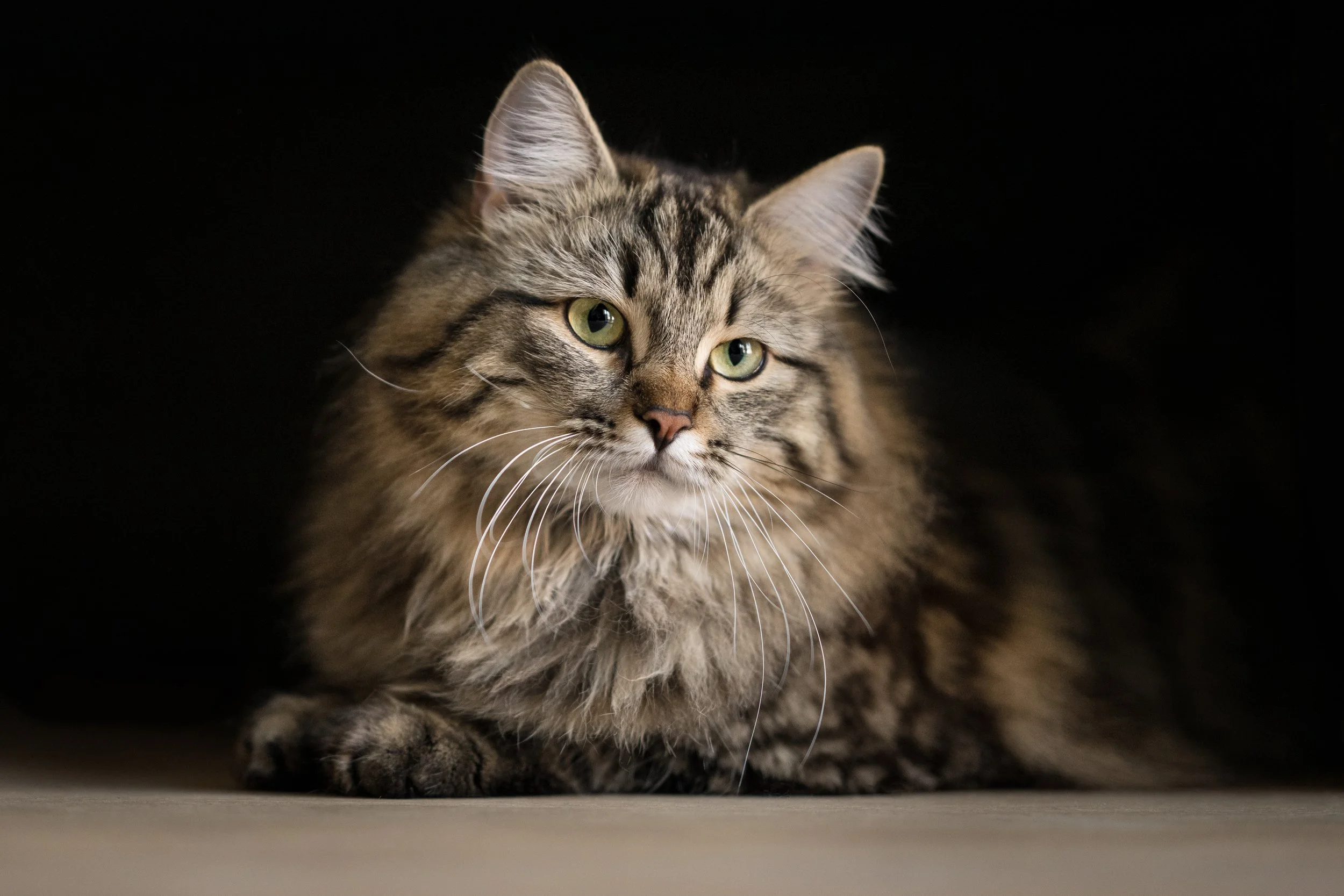
Tabitha
Low: 51.20 mcg/g
Tabitha has a Low Fel d1 level (in the 40–120 mcg/g range), toward the lower (better) end of this category. This solid result indicates she produces significantly less of the main allergen than average cats, meaning that her offspring are likely well-suited for allergy-prone homes with mild to moderate symptoms.
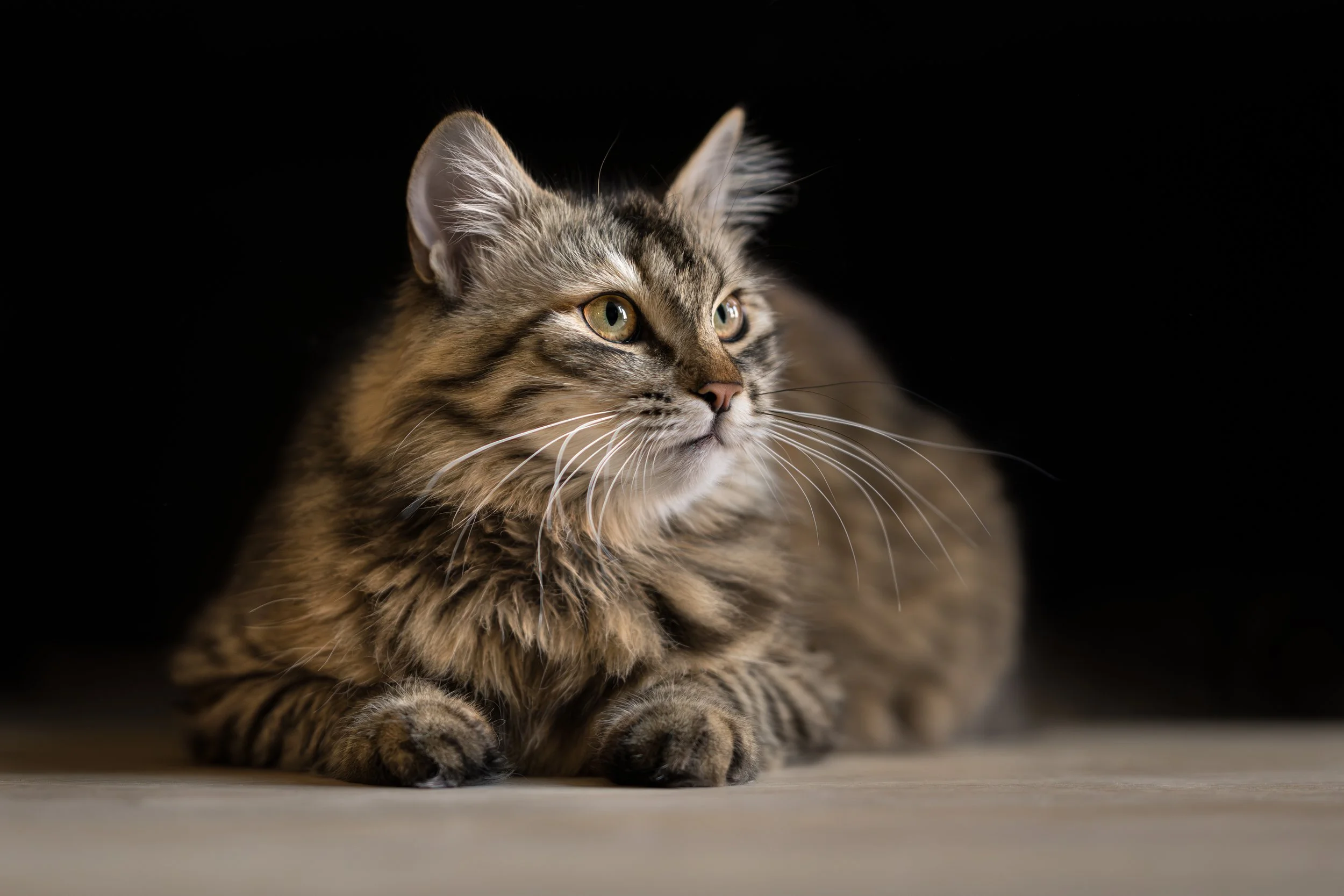
Polly
Very Low: 23.42 mcg/g
Polly has a Very Low Fel d1 level (in the 20–40 mcg/g range), sitting close to the Extremely Low threshold. This is an excellent result for a breeding queen and makes her a strong candidate for producing kittens suitable for allergy sufferers. Her low allergen production means her offspring will likely be suitable for families with moderate to severe cat allergies.
The next stage: individually tested kittens
Our intention is to take our programme a step further by individually testing every kitten in selected future litters.
These litters will be chosen using the Fel d1 results of their parents, and each kitten will be tested at approximately 12 weeks old.
This means that rather than choosing a kitten simply because it is a Siberian, allergy-sensitive families will be able to consider a kitten with its own individual Fel d1 result.
For someone who has previously been unable to live comfortably with cats, this additional information can make finding a suitable companion much more achievable.
Our breeding-cat testing is still in progress, so further details about our first tested litters will be published once all of our results are known.
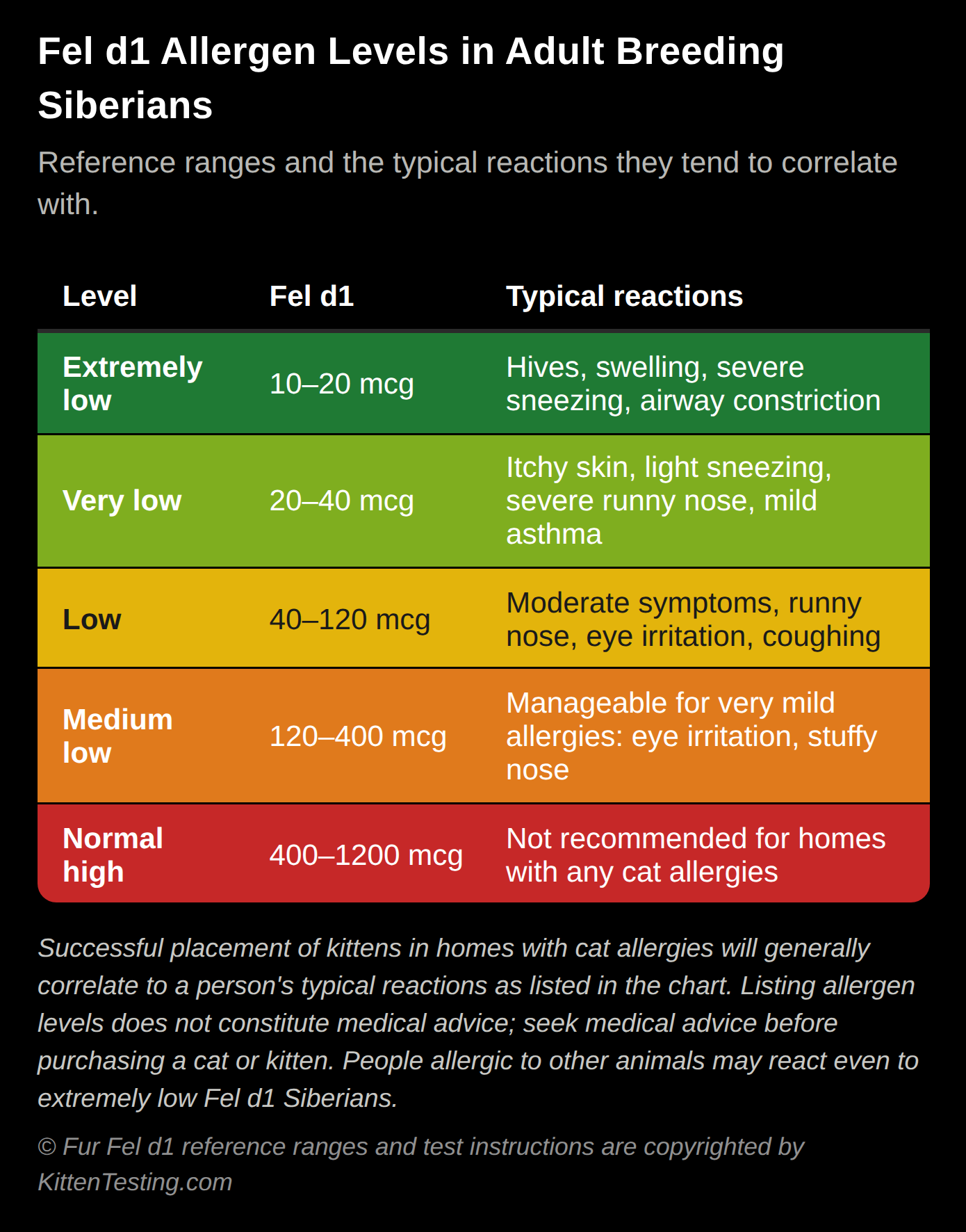
KittenTesting developed its Cat Allergy Chart to help families understand how different Fel d1 levels may relate to different degrees of cat allergy.
Cats are classified according to the amount of Fel d1 they produce, ranging from exceptionally low through to normal allergen levels.
For allergy-sensitive families, this allows us to look at both the severity of their allergy and the individual kitten's result when considering which kittens may be the best match.
Our goal is to produce kittens with reliably low Fel d1 levels, increasing the chances of successful placements in homes with cat allergies.
Cat Allergy Chart reproduced with permission from kittentesting.com
What about other cat allergens?
Fel d1 causes around 70% of cat allergies, but it isn't the only feline allergen.
Some people are sensitive to other proteins, including albumins and lipocalins. This can be particularly relevant for people who also have significant allergies to animals such as horses or rabbits, or certain animal-derived foods.
For these families, a low Fel d1 result may not tell the whole story, so we may recommend additional allergy assessment before proceeding.
This is one reason we prefer to discuss each allergy-sensitive household individually rather than simply matching people to a number on a laboratory report.
Tested and untested kittens
Not every Ammorina family needs allergen testing, so not every litter will necessarily be tested.
Families without allergy concerns will continue to be able to choose from our untested litters at our standard kitten price.
Selected future litters will be individually Fel d1 tested for families where allergies are an important consideration.
Tested kittens will be priced according to their individual Fel d1 classification and will remain with us for slightly longer while testing is completed and results are returned.
These placements will also include additional individual guidance and an allergy-specific return guarantee, providing further reassurance should a tested kitten prove unsuitable because of an allergic reaction.
Allergy assessment before choosing a kitten
If someone in your household has a cat allergy, we'll discuss their allergy history with you as part of the placement process.
Where it would be useful, we may also recommend fur testing before you proceed.
Fur testing is available only to approved prospective Ammorina owners where appropriate. It forms part of our kitten placement process and is not offered as a standalone allergy-testing service.
Our aim is to bring together the information we have about you and the individual kitten, helping us make the most informed match possible.

A considered approach to allergies
No cat can be guaranteed to be completely allergen-free, because people can react to different feline proteins and individual immune responses vary.
By understanding the Fel d1 levels within our breeding programme and, ultimately, the individual level of a tested kitten, we hope to give more allergy-sensitive families the opportunity to experience life with a cat.
Interested in an Ammorina kitten?
If allergies are a consideration for anyone in your household, please tell us when you enquire so that we can take this into account when discussing future litters with you.
Prospective owners complete our Kitten Placement Form before being added to our waiting list. This helps us get to know you and make appropriate placements when kittens become available.
There is no charge to join our waiting list and no obligation to take a kitten.
To join our waiting list, get in touch here